
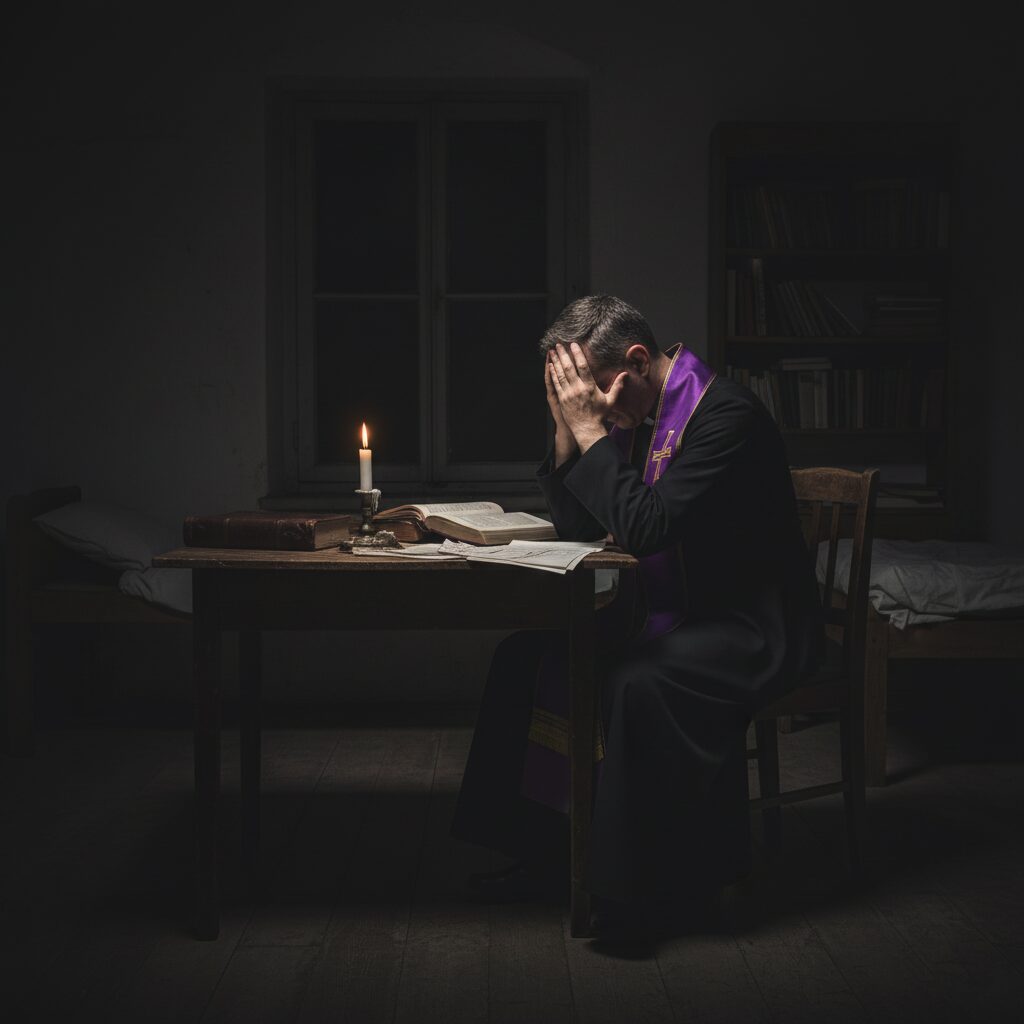
Every person engaged in ministry — whether ordained priest, religious, lay catechist, youth worker, spiritual director, or parish volunteer — eventually encounters a season when the work feels dark. The programmes that once energised you now drain you. Prayer feels dry. People seem ungrateful or indifferent. Results are meagre or invisible. You wonder whether you’re making any difference at all, whether God is present in this work, whether you should continue. St John of the Cross knows this darkness intimately. Though he lived in XVI century Spain, his teachings on the dark night are very relevant to modern ministers dealing with burnout, disillusionment, and spiritual dryness.
John’s most famous work, The Dark Night of the Soul, describes two nights the soul must traverse: the night of sense and the night of spirit. Both have direct application to ministry. The night of sense strips us of reliance on feelings, consolations, and tangible results. The night of spirit purifies even our spiritual motivations, detaching us from subtle forms of self-seeking that can infect even holy work. “God perceives the imperfections within us, and because of His love for us, urges us to grow up,” John writes. “His love is not content to leave us in our weakness.” When ministry feels like night, God may be urging us beyond immature ways of serving; ways that depend too heavily on affirmation, visible success, or emotional satisfaction. He invites us into a purer service, motivated solely by love for Him and His people.
John observes that beginners in the spiritual life often experience consolation: “God weans beginners from the breasts of His tender love… and makes them walk by faith alone.” The same holds for ministry. Early enthusiasm and visible fruit may give way to years of steady, unrewarded labour. This is not regression but maturation. God weans us from the “breasts” of ministerial satisfaction so we might serve with mature, selfless love.
One of John’s most challenging insights concerns the subtle pride that can contaminate ministry. “Spiritual persons have toward God an attitude that is very respectful and deferential yet, interiorly, there can exist a certain hidden presumption,” he warns. We may believe we’re serving God when we’re actually serving our own need for significance, our desire to be needed, or our attachment to being seen as effective ministers. The dark night exposes these mixed motives. When programmes fail, when people don’t respond as hoped, when our efforts seem fruitless, we’re forced to ask: Why am I really doing this? For God’s glory or my own validation? Out of love or out of need? “O guiding night! O night more lovely than the dawn!” John exclaims in his poetry, recognising that this painful exposure is actually divine mercy leading us to purer love. Ministry in the night means continuing to serve when there’s no applause, no visible fruit, no emotional reward; only bare obedience to God’s call and love for His people. “The soul that truly loves God must not seek satisfaction in God but must rather seek to satisfy God.” This is the crucible that transforms ministers from needy servants seeking fulfilment to mature labourers content to plant seeds others will harvest.
Perhaps nothing challenges ministers more than the experience of dry prayer. How can we lead others toward God when we ourselves feel distant from Him? How can we speak of divine love when our own prayer feels empty? “The more habitual the soul’s union with the will of God, the purer it is in this life,” John replies, “and in the next life, when the mist and cloud of this mortal flesh are lifted, it will see God face to face.” The dryness we experience in prayer may actually indicate growth, not decline. God is teaching us to love Him for Himself, not for the feelings He gives us. We need not manufacture spiritual experiences or pretend to enjoy consolations we don’t feel. Instead, we can rest in God’s presence with quiet attention, trusting that He works in darkness as surely as in light. This honest prayer, stripped of performance and pretence, may be the most authentic witness we offer to those we serve.
John insists that the dark night, though painful, produces abundant fruit: humility, compassion, authentic prayer, and deeper union with God. “The endurance of darkness causes an admirable light and knowledge to shine forth,” John promises. Those who have known ministerial night can sit with others in their darkness without needing to fix or rush them toward light. They’ve learned that God works invisibly, that fruit comes in His timing, that faithfulness matters more than success. Moreover, suffering purifies our ministry. “In the measure that the soul is stripped of its sensory and temporal clothing and strengthened in poverty of spirit, the spiritual influence of God in it becomes more powerful,” John teaches. Ministers stripped of ego, attachment to results, and the need for recognition become clearer channels of divine grace. Paradoxically, we minister most effectively when we’ve stopped trying to be effective and simply remain faithful.
The temptation in dark seasons is to quit, to change course, to seek easier work or more rewarding fields. John urges us to persevere. “Walk in the way of hope, which has to do with what you cannot see.” The darkness is not evidence of God’s absence but of His purifying presence, preparing you for deeper intimacy and more fruitful service. Continue in ministry not because you see results but because God has called you. Pray not because it feels good but because relationship with God transcends feeling. Serve not because people appreciate it but because love serves.
The Carmelites at Boars Hill continue the tradition of St John of the Cross, offering spiritual guidance, retreats, and contemplative witness to a world desperately needing depth, silence, and authentic encounter with God. Our ministry includes accompanying those walking through their own dark nights – ministers, religious, and laypeople seeking wisdom for difficult seasons. This work depends entirely on the generosity of those who value contemplative ministry in our busy, distracted age. Your donation helps us maintain a place of silence and prayer, provide spiritual direction, offer affordable retreats, and share the wisdom of Carmelite saints with contemporary seekers. As John of the Cross teaches, the night yields unexpected fruit. Your support of this ministry may bear fruit you’ll never see – in lives touched, faith deepened, and ministers sustained through dark seasons.
If this reflection has spoken to your experience, or if you value the Carmelite tradition’s wisdom for today’s Church, please consider supporting our ministry here. Your partnership allows us to continue walking with others through the night, trusting that “the endurance of darkness causes an admirable light to shine forth.”