
V/ My eyes are turned to you, O Lord.
R/ You are the joy and gladness of my youth.
V/ Grant me the Wisdom that sits by your throne.
R/ That I may dwell as a child in your presence.
Let us pray. Lord, in your loving design, you have drawn me here to encounter you in your Word and, in you, to find myself. Empower me by your Wisdom, that this meditation may be a font of transformation and freedom, bearing fruit for my salvation and that of the whole Church. Amen
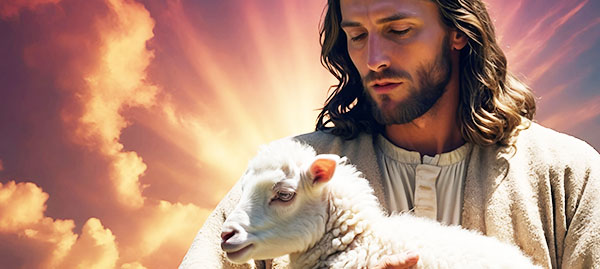
BEHOLD THE LAMB – The Power of Submission
2nd Sunday in Ordinary Time (Year A)
Isaiah 49:3, 5-6; Psalm 39(40); 1 Corinthians 1:1-3; John 1:29-34
18th January 2026
Today, the liturgy shifts our gaze from the hidden life of Jesus to the moment His public mission begins. We stand on the banks of the Jordan with John the Baptist, who sees Jesus approaching and utters words that have echoed through centuries: “Behold the Lamb of God, who takes away the sin of the world.”
We hear these words at every Mass, but do we truly hear the paradox they carry? Our First Reading provides the backstory. God speaks to His Servant: “You are my servant… in whom I shall be glorified.” In the darkness of exile, God promises this Servant a mission that is not merely local, but cosmic—to be a “light to the nations.”
In the Jewish context, this creates a riddle. The Messiah was expected to be the Lion of the tribe of Judah, bringing political emancipation. Yet, Isaiah describes a Suffering Servant. The New Testament unites these seemingly opposing metaphors: Jesus is the Lion of Judah because He is the Lamb of God. Victory through the mystery of sacrifice becomes discernible.
St. Edith Stein, the great Jewish convert and martyr, understood that true reconciliation is not found in the ritual slaughter of goats and bulls. She saw that salvation lies in the will of the “True Paschal Lamb.” God desires a heart willing to yield unreservedly. Stein writes that to follow this Lamb is to mount the Cross.
The Psalmist’s cry, “Here I am, Lord! I come to do your will,” is not a whisper of resignation; it is a battle cry. It requires strength to stay on the Cross when you have the power to come down. It is the decision to obey the Father’s will even when it leads to the death of our ego. This is the path to victory over the vices that threaten peace in our families, our world, and even in our church today.
St. Paul’s letter to the Corinthian church reminds us that we are called to take our place among the saints. When the world points us toward greed, dominance, division, hypocrisy, and lies, John invites us to simply “Behold” the Lamb and follow wherever He leads (Rev 14:4).
In the Way of Perfection 26, St. Teresa of Avila advises: “I am not asking you now to think of Him… I am asking you only to look at Him.” To look at Him is to admire in that pure gaze what we are not, and to see how we ought to respond to the demands of every relationship. Through this mutual gaze, Christ imbues our souls with the freedom to navigate our sinful proclivities.
This is the essence of our Eucharistic spirituality. Every moment can be enriching if we quiet our inner emotions to heed the Baptist’s call. Each time you behold the Sacred Host, do not just see a piece of bread.
- Behold the Servant of Isaiah, the Light of the Nations.
- Behold the Psalmist who says, “Here I am, Lord, I come to do your will.”
- Behold the Lion who conquered death by refusing to return its violence.
“In that little host is the solution to all the problems of the world,” says Pope St. John Paul II. Behold Him, and become what you adore.
Prayer:
Lord Jesus, Lamb of God, You conquered the darkness not with violence, but with the sacrificial love of the Cross. Grant us the grace to fix our gaze upon You in the silence of our hearts. Transform our hesitation into a courageous “Here I am,” that we may become Your allies in the world—fighting evil with truth, conquering hatred with charity, and becoming what we adore in the Holy Eucharist. Amen.
Ponder Questions:
1. Do I allow for moments of silent adoration, of the Blessed Sacrament?
2. Is there a specific situation or relationship where I am refusing to let go of my own will to accept God’s will?
3. When I face conflict or injustice this week, how can I respond with the strength of the Lamb rather than react in aggression of the world?
Practice:
This week, you will likely face a moment where you are asked to submit—perhaps to a difficult person, a frustrating situation, or an unexpected duty. Do not resent it as a weakness. Instead, pray Psalm 40: “Here I am, Lord.” Unite your will to the Lamb, and offer your obedience as a “Lion-hearted” act of love for the salvation of the world.
Memory phrase:
“Behold Him, and become what you adore.”