
V/ My eyes are turned to you, O Lord.
R/ You are the joy and gladness of my youth.
V/ Grant me the Wisdom that sits by your throne.
R/ That I may dwell as a child in your presence.
Let us pray
Lord, during this Lent, I commit myself to You and ask that You take over my life. Remove distractions and fill me with Your spirit of love for my failings. Strengthen my resolve with Your power as I engage in prayer, fasting, and charity. Nurture my love for Your Word and keep me attuned to Your voice. Amen.
OVERCOMING PLEASURE, POSSESSION, AND PRIDE
Rev. Fr Emeka K. Agboeze, OCD
First Sunday Of Lent, Yr A
Genesis 2:7-9,3:1-7; Psalm 50(51):3-6,12-14,17; Romans 5:12-19; Matthew 4:1-11
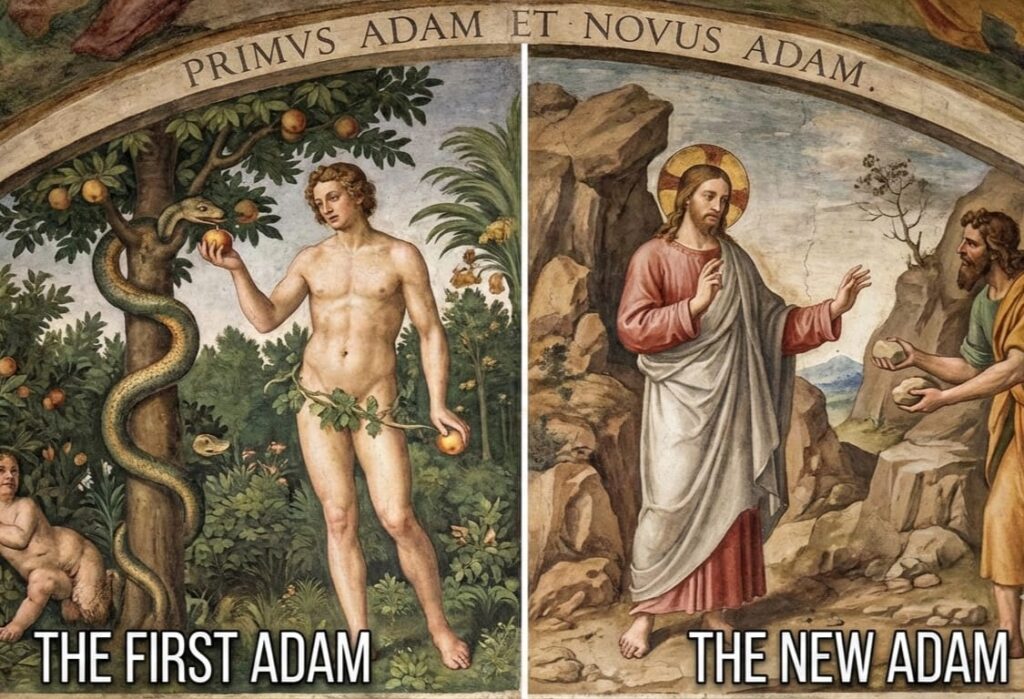
‘The woman saw that the tree was good to eat and pleasant to the eye, and that it was desirable for the knowledge that it could give. In these words, the scripture summarises the temptation of our first parents and their descendants. Here, the traditional idea comes to mind of the triple concupiscence to which all human temptations could be reduced: pleasure, possession and pride. The tree was tempting because it promised pleasure (good to eat), charmed the eye as fit to be acquired (possession) and pledged access to higher knowledge (pride).
St John warns us about these disordered human desires, indicating their true origin: “Everything in the world – the lust of the flesh, the lust of the eyes, and the pride of life – comes not from the Father but from the world” (1 Jn 2:16). They are not from the Father above, but from the world below; and that is why we must avoid them as temptations.
Solomon had firsthand experience of these lusts and their deceptive promises: Pleasure – He was in a stable relationship with numerous women; Possession – reigning in peacetime, he amassed great wealth thanks to the economic bloom; Pride – As the most powerful person in the land, he inherited a sturdy dynasty firmly established by his father. Yet, nothing from below can satisfy the human heart. Solomon confesses: “Vanity of vanities, all is vanity” (Eccl. 1:1-2). Temptations do not keep their promises.
Adam succumbed to that deception, and so “sin entered the world through one man.” But Jesus undoes this by enduring the same trials, being “tempted in every way just as we are” (Heb. 4:15). The devil urged Him to entertain pleasure by eating, persuaded Him to affirm His power over nature (pride), and showed Him glittering kingdoms to possess.
The new Adam reversed the order. Where Adam fell through self-seeking, Jesus seeks exultation through the cross. As St. Paul warns, anyone who embraces these worldly desires is an enemy of the cross: “Their god is their stomach [pleasure], and their glory [pride] is in their shame. Their mind is set on earthly things [possession]” (Phil. 3:18-19).
The tempter challenged Jesus, saying, “If you are truly the Son of God.” Satan sought to divorce sonship from fatherhood. This is our temptation too: we are children of God through baptism, but the devil wants to alienate us from the Father through disobedience.
Spiritus inde perit, dum corpus dulcia quaerit (the soul perishes while the body seeks sweet things). To resist, we have the three pillars of Lent as true remedies, which St. Teresa of Avila also identifies as fruits of union with God: Fasting – overcomes pleasure through detachment; Almsgiving – counters possession by promoting the desire to give; Submissive Prayer – acts as the antidote to pride by fostering humility.
Above all, Christ Himself is the real remedy. The Eucharistic Lord gives Himself to us as food so that we live by consuming Him, just as Adam died by consuming the poisonous fruit. “He is the sublime fruit of that tree of life which Adam was not allowed to touch,” says Marco Frisina.
Christ has allowed us to touch Him intimately by His incarnation. Do I seek communion with Him? Do I prefer the things of this world to friendship with Him? What are the temptations I am currently battling with? Let us run to Him for help.
Prayer:
Lord Jesus, our true remedy, grant me the grace to see the world’s deceptions. When tempted by pleasure, possession, or pride, draw me back to your cross. Help me embrace fasting, almsgiving, and prayer as pathways to a deeper union with you. May I hunger only for you, the true Bread of Life. Amen.
Ponder Questions:
How do pride or disobedience distance you from your identity as a beloved child of God?
Where are you turning to earthly desires instead of addressing spiritual hunger?
Which of the three concupiscences (pleasure, possession, or pride) do you struggle with most, and which Lenten pillar (fasting, almsgiving, or prayer) is God inviting you to focus on this week?
Practice for the Week
Take a moment in prayer to identify which temptation you face most right now, and apply St Teresa’s antidote:
Pleasure: Commit to a physical fast this week, like skipping a favourite snack or digital entertainment.
Possession: Practice detachment by giving away three good-quality items or making a sacrificial donation to charity.
Pride: Pray the Litany of Humility each morning or spend 10 minutes in silent prayer, simply listening.
Phrase to remember:
“Nothing from below can satisfy the heart of man… Christ himself is the real remedy.”