
V/ My eyes are turned to you, O Lord.
R/ You are the joy and gladness of my youth.
V/ Grant me the Wisdom that sits by your throne.
R/ That I may dwell as a child in your presence.
Let us pray
Lord, in Your all-providential plan, You have led me to this moment to rediscover myself in Your Word and Wisdom. Aid me to make this time of meditation and prayer enriching, transforming, and liberating for my well-being and others.
DISMANTLING THE COMFORTABLE DARKNESS OF OUR UNJUST SYSTEMS
By Clement Obiorah, OCD
12th SUNDAY IN ORDINARY TIME, YR A
Jeremiah 20:10-13; Psalm 69(68):8-17. 33-35; Romans 5:12-15; Matthew 10:26-33
There is a quiet tragedy woven into human society: our proclivity to erect and maintain unjust systems. Driven by self-preservation, we seek security in structures that benefit us at the expense of others. Over time, this instinct curdles into systemic corruption. We collude, normalising subtle evils until the abnormal becomes the status quo, and speaking truth becomes taboo. During his pontificate, Pope Benedict XVI imparted a profound lesson throughout his life as a theologian and shepherd: when we sever our reliance on Divine Providence and bow to the prevailing cultural winds to secure our relevance, we do not secure our freedom. We merely build our own exiles.
Today’s lection pierces this apathy, challenging our self-protective structures and asking us to anchor our security in Divine Providence. In the First Reading, Jeremiah is trapped between divine truth and societal collusion.
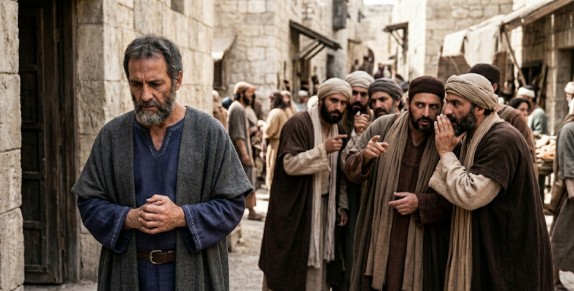
“‘Denounce him! Let us denounce him!’ say all my close friends, watching for my fall.” (Jeremiah 20:10)
Jeremiah is not fighting faceless enemies; he confronts his own community and religious establishment. He experiences profound desolation, caught between the Divine Word’s compulsion and his peers’ violent rejection. His personal suffering becomes a living, somatic prophecy of the exile—a participatio in the pathos of God over a rebellious people. The manipulation in his society has been so masterfully woven into daily life that ethical discernment has entirely eroded, especially within the priestly class. Jeremiah disturbs the supposed peace of normalised unjust structures, yet nobody raises an eyebrow. Something isn’t right.
We see a striking parallel in St Titus Brandsma. As a journalist and Carmelite friar during the Nazi occupation of the Netherlands, he refused to print fascist propaganda or collude with a regime of darkness to save his relevance. Like Jeremiah, Brandsma faced the ultimate dilemma: remain silently complicit, or speak out and become an outcast. We are invited to take on this prophetic mantle today. The Lord still speaks intimately to our hearts, urging us to discern how our silence might enable moral evil. We are called to walk the lonely path of righteousness, pointing out error to enable genuine reform.
The Responsorial Psalm (Psalm 69) serves as a poignant echo of Jeremiah’s isolation, the cry of anyone deeply uncomfortable with the unjust systems we create:
The cost of truth: “To my own kin I have become an outcast, a stranger to the children of my mother.”
The plea for grounding: “In your great mercy, answer me, O God, with your faithful salvation.”
This psalm invites us to interrogate our intentions. Are we building systems that marginalise others to protect our comfort? When we feel the friction between the Gospel’s demands and society’s expectations, this prayer gives us permission to lament our broken structures while trusting that God “attends to the needy.”
If Jeremiah diagnoses the disease of systemic injustice, Jesus in Matthew’s Gospel provides the radical cure: total surrender to Divine Providence. Unjust systems thrive on fear—of losing relevance, wealth, or safety. Jesus dismantled this leverage, commanding His disciples:
“Do not fear those who kill the body but cannot kill the soul.” (Matthew 10:28)
Speaking truth in the light requires forfeiting the false securities corrupt systems promise. Jesus challenges us to recognise our true worth before the Father:
We are seen: “Even the hairs of your head are all numbered.”
We are valued: “You are of more value than many sparrows.”
Imprisoned in Dachau, St Titus was stripped of everything—his freedom, health, and familiar Carmelite habit. Yet, this sparrow understood his worth in the eyes of the Father, rendering the threat of execution powerless over his soul.
When we understand our place as deeply loved children of the Father, the threat of societal rejection loses its power. We are freed to live in a radical commitment to Gospel truth, rather than transactional alliances based on mutual self-preservation.
Our human desire for self-preservation carries the seed of self-destruction; but through the grace of the “Second Adam” (Second Reading), we are offered a new way to be human. Christ’s perfect obedience breaks the cycle of systemic sin.
By acknowledging Christ before others, we must actively discern personal reformation and conversion in an unshakeable trust in God’s providence.
Prayer
Almighty and merciful Father, You see how easily we are seduced into silent complicity. Grant us the prophetic courage of Jeremiah and the serene fortitude to strip away our reliance on the false securities of this age, and anchor our hearts entirely in Your Divine Providence. We ask this through Jesus Christ, our Lord. Amen.
Ponder Questions
- Where do I find myself remaining silent out of a fear of marginalisation?
- What false securities (reputation, financial comfort, peer approval) am I currently relying upon instead of trusting entirely in the providence of the Father?
- How might cultivating a deeper, more interior life—an inner sanctuary untouched by the world—give me the courage to challenge the normalisation of subtle evils?
Practice for the Week: The Altar of the Ordinary
This week, practise a deliberate “prophetic pause” in your daily conversations and decision-making. When you find yourself in a situation where the group consensus is leaning towards gossip, a subtle injustice, or an ethically compromised shortcut, do not immediately nod along to keep the peace. Take a brief, silent pause—perhaps silently praying, “Lord of hosts, who tests the righteous.” Use that three-second gap to disrupt the momentum of collusion. You need not give a grand speech; simply withhold your complicit agreement, or gently offer a counter-perspective is often enough to introduce the light of Christ into a comfortable darkness.
Memory Phrase
‘Do not fear those who kill the body.’