
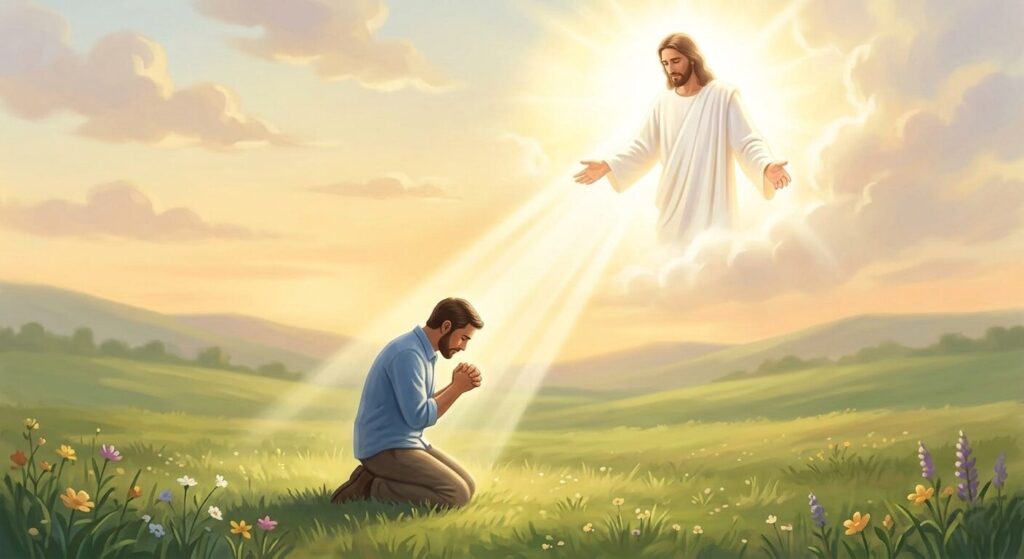
Meet Thomas. He’s thirty-eight, an accountant, married with two kids. He spent Lent genuinely trying — trying to pray more consistently, trying to be a better person, trying to show up for his family with patience and presence. And he feels like he failed. He missed prayer days when work got busy. He got angry at his kids over small things. He ate chocolate when he had promised himself he wouldn’t. Easter morning arrives, and Thomas sits in church thinking: “I’m still the same broken person I was on Ash Wednesday. Nothing’s changed.”
Then the Gospel reading begins. John 20. Thomas the Apostle (his namesake) reaching out and touching Jesus’ wounds, saying the words: “My God and my Lord.” Something shifts. Our Thomas realises that resurrection isn’t about being perfect. It’s about being transformed despite imperfection. Even Thomas the Apostle doubted, and Jesus showed up anyway. He sits in the pew, consoled. “Maybe something HAS changed in me. Maybe I just couldn’t see it.”
Living the resurrection doesn’t mean achieving perfection. It doesn’t mean all your problems are solved. It doesn’t mean transformation eliminates struggle. Rather, it means life from death, not life without death; hope in darkness, not the absence of darkness; love despite sin, not sinlessness.
The disciples were still scared, confused, and doubting AFTER the resurrection. But they were transformed anyway.
Think about it. After Jesus rose, the disciples hid behind locked doors, terrified. Thomas refused to believe. Peter returned to fishing, like the past three years hadn’t happened. The women fled the empty tomb “trembling and bewildered” (Mark 16:8). These are the witnesses of the resurrection. Still scared. Still confused. Still struggling. But transformed.
Teresa of Ávila teaches something crucial about transformation in the Seventh Mansion; that is, the place of full union with God, the deepest intimacy possible in this life. Even there, suffering remains. In fact, Teresa was most tested during her most transformed state. This is exactly what she meant when she prayed that most profound mystical prayer: “I die because I do not die,” expressing her longing for complete union with God while suffering intensely in her body.
You can be resurrected and still struggle. Transformation doesn’t make life easy. What changes isn’t your circumstances but your capacity to love within those circumstances. You are not the same person, even if your life looks exactly the same from the outside.
Signs of Resurrection in You
How do you know if you’re being transformed? Here are five signs:
1. Increased Capacity for Love
You find yourself being kinder to the difficult person at work. You notice the moment when you are about to snap at your spouse or child, and you pause, just for a second. You serve someone even when you don’t feel like it, and you do it without resentment. Thomas notices he’s more patient with his kids. Not perfect. Not every time. But more. When his daughter spills milk at breakfast, he takes a breath instead of exploding. That’s a sign of the resurrection.
2. Deeper Hunger for God
Prayer feels more essential, less optional. You miss it when you skip it, the way you miss a friend you haven’t talked to in days. You actively seek silence instead of filling every moment with noise and distraction. Thomas finds himself reading Scripture in the morning without the internal “should” voice driving him. He just wants to. That simple shift, from obligation to desire, is a sign of the resurrection.
3. Growing Freedom from Fear
You still have fears. Plenty of them. But they don’t control you the way they used to. You can endure uncertainty without immediately spiralling into anxiety. You trust God in ways you couldn’t before. Thomas faces potential layoffs at work. Six months ago, he would have panicked; he would have lost sleep for weeks. Now he’s still worried, but underneath the worry is a strange, quiet trust: “Whatever happens, I’ll be okay. God will make a way.” That again, is a sign of the resurrection.
4. More Comfortable with Your Brokenness
You are not proud of your sin. But you aren’t crushed by it either. You can hold two truths together: “I’m imperfect” AND “I’m loved.” You have less need to ‘perform perfection’ for others or for yourself. Thomas can now say to his wife, “I messed up. I was wrong. I’m sorry,” without defensiveness or self-justification. Being okay with one’s vulnerability is a sign of the resurrection.
5. Resurrection Moments
Brief, fleeting experiences of joy, peace, presence. Like the disciples on the road to Emmaus exclaimed: “Were not our hearts burning within us?” You learn to notice these precious moments; be attentive to them. Thomas is watching the sunrise one morning, coffee in hand, and he is suddenly overwhelmed with gratitude: “I’m alive. God is real. This is grace.” The moment passes quickly, but it was undeniably there. That experience is a sign of the resurrection.
Resurrection isn’t a destination but a direction. Are you moving toward life or death? Toward love or fear? That is the Easter question.
Living the 50 Days
Easter isn’t one Sunday. The Easter season lasts fifty days, from Easter Sunday through Pentecost. Interestingly, it is the longest liturgical season after Ordinary Time. Why? Because you are being invited to linger in resurrection. Don’t rush past it. Stay here. Let it work on you.
Here’s how to live these fifty days:
Weeks 1-2: Shock and Awe
The disciples are still processing: “Did that really happen? Was that real?” You do the same. What just happened in your Lent? What died in you? What’s trying to rise?
Practice: Start a daily gratitude journal. Each day, name three small resurrections you witnessed. Even tiny ones count. Anything that speaks of life, grace, goodness, beauty counts as a resurrection: a flower blooming through concrete; your child’s laughter; a moment of unexpected peace in prayer; an act of kindness (yours or someone else’s)… Don’t skip days. If you miss one, catch up.
(This journalling can run all through Eastertide, not just the first two weeks. On Pentecost, read through all fifty days. Ask yourself: “What pattern of resurrection do I see emerging? How has God been working?”)
Weeks 3-4: Resurrection Encounters
The disciples keep meeting the Risen Jesus — in the Upper Room, on the road to Emmaus, at breakfast on the beach. He shows up in unexpected places, often unrecognised at first. Where are you encountering the Risen Christ? In what surprising places is He showing up?
Practice: Notice moments of unexpected grace. Write them down.
Weeks 5-6: Sending Forth
Jesus tells the disciples: “As the Father has sent me, I am sending you” (John 20:21). Resurrection isn’t just for you; it’s for mission. You are being sent. What is your post-Easter mission? How is God asking you to pour out what you have received?
Practice: One intentional act of service each week.
Week 7: Pentecost Preparation
The disciples wait in the Upper Room for the Holy Spirit (Acts 1). They don’t know exactly what’s coming, but they know something is. They pray. They wait. They prepare. What’s next after your resurrection? What new thing is God preparing in you?
Practice: Daily prayer for guidance, fire, courage.
Thomas the Apostle doubted. So do we. But doubt doesn’t disqualify resurrection. You are being transformed… maybe slowly, maybe imperceptibly, but truly. Trust the process. Notice the small signs. Keep walking toward life, toward love, toward Light.
Christ is risen! He is risen indeed!
A Note on what CACS can do for You
CACS’ Spiritual Direction Formation Programme specifically trains directors to recognise and companion people through these death-and-resurrection cycles. Every person experiences Lent and Easter moments throughout their lives, and not just during the liturgical seasons. Trained spiritual directors learn to recognise the signs of resurrection, to name what God is already doing, to help people trust the process of transformation even when it feels slow or invisible.