
V/ My eyes are turned to you, O Lord.
R/ You are the joy and gladness of my youth.
V/ Grant me the Wisdom that sits by your throne.
R/ That I may dwell as a child in your presence.
Let us pray
Lord, in Your all-providential plan, You have led me to this moment to rediscover myself in Your Word and Wisdom. Aid me to make this time of meditation and prayer enriching, transforming, and liberating for my well-being and others.
THE TREASURE IS WORTH EVERYTHING
By Fr Noel D Cunha, OCD
17th Sunday in Ordinary Time, Yr A
1 Kings 3:5-6a, 7-12; Ps 119(118):57, 72. 76-77. 127-130; Romans 8:28-30; Matthew 13:44-52
The first reading gives us young Solomon, standing before God who asks: “Ask something of me and I will give it to you.” Solomon could ask for wealth, long life, victory over enemies – all the things that seem to promise happiness and security. But he asks for “an understanding heart.” He asks for wisdom, for the ability to distinguish right from wrong, to govern God’s people with justice. Solomon has recognized what truly matters. He has discovered the treasure hidden in the field, and he is willing to let go of everything else to obtain it.
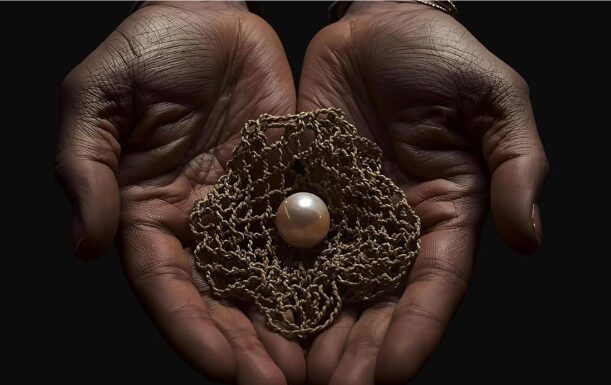
In her writings, St Teresa of Avila constantly returns to the question of desire. What do we really want? So many people, she observed, pray for spiritual growth but actually desire comfort, consolation, the approval of others, or freedom from difficulty. They want God, yes, but they also want a hundred other things, and these competing desires fragment the soul. Teresa came to understand that progress in prayer requires a simplification of desire, a gradual movement toward seeking God alone. This is precisely what Jesus describes in the parables of the hidden treasure and the pearl of great price. The one who finds the treasure “goes and sells all that he has and buys that field.” The merchant searching for fine pearls, upon finding one of great value, “goes and sells all that he has and buys it.” Both parables emphasize the totality of the exchange. Not some of what they have, not most of what they have, but all that they have.
This is the radical detachment that John of the Cross teaches throughout his writings. In the Ascent of Mount Carmel, he draws his famous diagram: a mountain with many paths leading upward, but only the centre path, marked with the word “nothing,” reaches the summit. The side paths are labelled with various goods: “the honour of this world,” “the comfort of this world,” “the riches of this world.” John’s point is not that these things are evil in themselves, but that clinging to them prevents us from obtaining the one treasure that truly satisfies. The merchant in Jesus’ parable has been searching for fine pearls all his life. He knows quality when he sees it. He has devoted himself to discerning the genuine from the fake. But when he finds the pearl of great price, everything changes. All his previous treasures become worthless in comparison. This is true wisdom.
In the second reading, Paul assures us that this single-hearted seeking is never in vain: “All things work for good for those who love God.” Notice the condition: for those who love God. Not for those who use God to obtain other things they love more. Not for those who make compromises with the Gospel way, keeping one foot in the Kingdom and one foot in the world. But for those who have found the treasure, sold everything, and bought the field. And what is this treasure? According to Paul, it is transformation into the likeness of Christ. This is the wisdom Solomon sought: the ability to see as God sees, to love as God loves, to judge with God’s justice. This is the pearl of great price: union with God, which Carmelite mystics describe as the innermost mansion of the Interior Castle, the summit of Mount Carmel, the marriage of the soul with its Beloved.
The parable of the dragnet adds a note of urgency. The Kingdom is like a net that catches fish of every kind. Eventually, there will be a separation. The question is: What have we chosen to treasure? What have we been willing to sell everything to obtain? Today, we are invited to examine our desires. What are we actually seeking? If God asked us, as he asked Solomon, “What do you want?” What would we say? The treasure is real. The pearl exists. God himself is the treasure hidden in the field of our lives. And he is worth everything. May we be granted the wisdom to recognise the treasure, the courage to sell all that we have, and the joy of possessing the one thing that truly satisfies the human heart.
Prayer
Lord God, You are the hidden treasure and the pearl of great price, worth everything we have. Grant us the wisdom of Solomon to desire an understanding heart above all else. Deliver us from divided desires that fragment our passion, and give us the radical courage of the saints to detach ourselves from comforts. Simplify our hearts so that we may sell all that we hold onto and joyfully possess You alone. Amen.
Ponder Questions
- What are the competing desires currently dividing your heart and fragmenting your focus?
- About Solomon’s choice, what would your immediate, unfiltered need be? Does it align with an “understanding heart”?
- What is the specific comfort or honour you are most hesitant to let go of for a greater treasure in God?
Practice for the Week
This week, identify one specific, “treasure” you rely on for comfort or distraction (such as social media scrolling, or the need to have the last word in an argument). Intentionally “sell” it by fasting from it for the week, and every time you feel the urge to indulge, pray: “Lord, You are my only treasure.”
Phrase for Memory
Simplify desire; sell all for the joy of the Lord.