
As the Church’s year ends and Advent has not yet begun — a reflection on holy waiting.
By Fr Alexander Ezechukwu , OCD
I write to you having just come home from eight days of silence and solitude — a little hermitage that was once a shepherd’s hut, at the House of the Divine Will in Dereham, kept by the Community of Our Lady of Walsingham. Eight days with almost nothing to do but wait on God taught me a thing or two about waiting: that it is harder, and far more fruitful, than I usually care to admit. So these words reach you straight from the silence. A November meditation on purgatory, the womb of God’s mercy, and being born again.
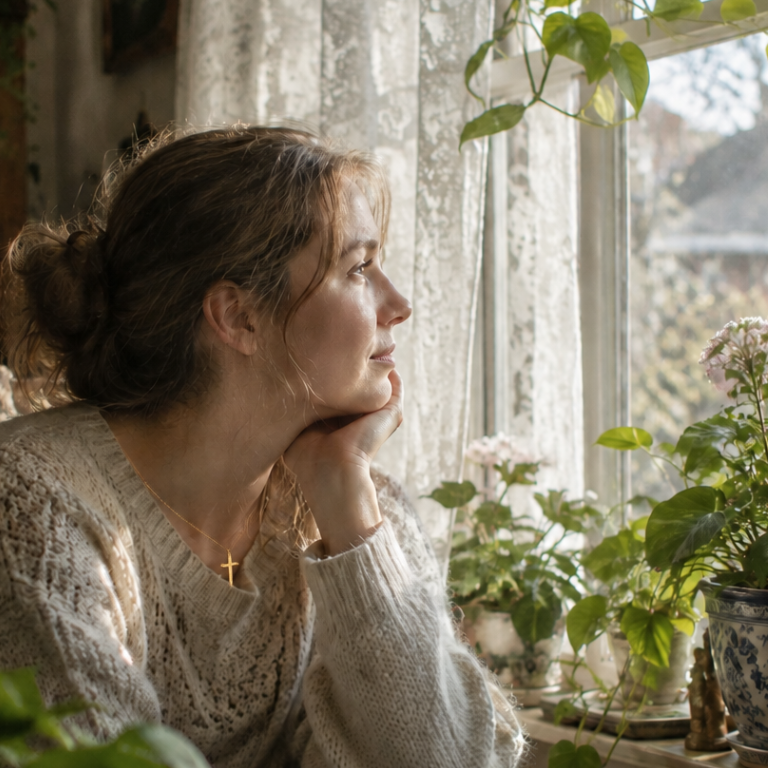
We stand, this week, in an in-between. The Church’s year is closing — this Sunday we crown it with Christ the King — and Advent has not quite begun. And most of us are living in some in-between all the time: waiting for an answer, a healing, a change, a prayer not yet answered, a clarity that will not yet come.
Waiting is hard, and our instincts are poor. We force the door — grasping, manufacturing an outcome — or we flee the wait, numbing it with distraction so we need not feel the ache of the not-yet. Scripture treats waiting as holy ground: “those who wait for the Lord shall renew their strength” (Isaiah 40:31).
Advent is the Church’s great school of waiting. Simeon and Anna grew old in the Temple, waiting to see the Lord’s salvation (Luke 2:25–38); Mary carried Christ through the slow, hidden months, when nothing could be hurried and everything was being formed. Waiting is not wasted time; it is the time in which something is brought to term.
And our waiting reaches further than our own small in-betweens. In Advent, the Church waits for the whole mystery of Christ — his first coming in the poverty of Bethlehem and his coming again in glory. The Kingdom is already here and not yet complete: already, for in Christ it has broken in among us (Luke 17:21); not yet, for we still cry: “Come, Lord Jesus” (Revelation 22:20), awaiting “the blessed hope, the appearing of the glory of our great God and Saviour” (Titus 2:13). Your waiting, whatever it is, belongs to that greater one.
Carmel gives this waiting a name: contemplation. John of the Cross teaches that in the night — when God seems far and nothing seems to happen — God is in fact at work, unseen, doing in the dark what could not be done in the light. What is asked of us there is not effort but a simple loving attentiveness to God. That loving attention, for John, is exactly what contemplation is. Teresa of Ávila, on her little bookmark, left the line that steadies every in-between: “Patience obtains all things.” For her, patience was not gritted teeth but the quiet confidence of a soul who knows that God alone suffices.
So patience is not passive. It is an active, trusting attentiveness — like Elijah’s servant, sent back again and again to scan the sea until a cloud no bigger than a hand appeared (1 Kings 18:43–44) and like the watchful servant, lamp lit through the long night because the Master is surely coming (Luke 12:35–37). To wait well is to stay at your post and keep your heart awake.
So name your in-between — and resist both temptations: do not force it, and do not flee it. Wait as Advent teaches: attentive, prayerful, trusting that the God who seems slow is not absent but at work, quietly bringing something to birth. Keep the lamp lit. The in-between is not empty. It is Advent. Someone is coming — and the waiting itself is where he forms us to receive him.
This fortnight’s practice offers a short Advent waiting exercise — a way to keep the heart awake and attentive as the new season of grace begins. Read it here.